Outdoor living
Outdoor living and covered patios in Dallas
Covered patios and outdoor rooms with real ceilings, posts and trim, built for a Dallas summer evening.
What goes wrong with a patio that looked finished
Most patio problems start where the new structure meets the old house. A cover tied into the roof without proper flashing gives rain a path behind the siding, and the damage shows up inside the wall long before anyone sees a stain on the patio. Dallas storms often arrive sideways, so a joint that sheds water on a calm day can still leak when the wind pushes it.
The next fault is at the ground. Posts set straight onto a slab, with no standoff base, sit in every puddle and wick moisture up the grain until the bottom of the post goes soft. A slab poured or left with no slope sends water to the back door instead of away from it, so a thin film of standing water turns into a threshold problem. Overhead, a ceiling fan hung from a box that was never rated for a moving load will wobble and eventually work loose.
Then there is the sun. A west-facing patio in a Dallas summer with no real shade is a place nobody sits until nine at night. Outdoor rooms get built and then go unused for exactly that reason, which is a design failure, not a furniture one.
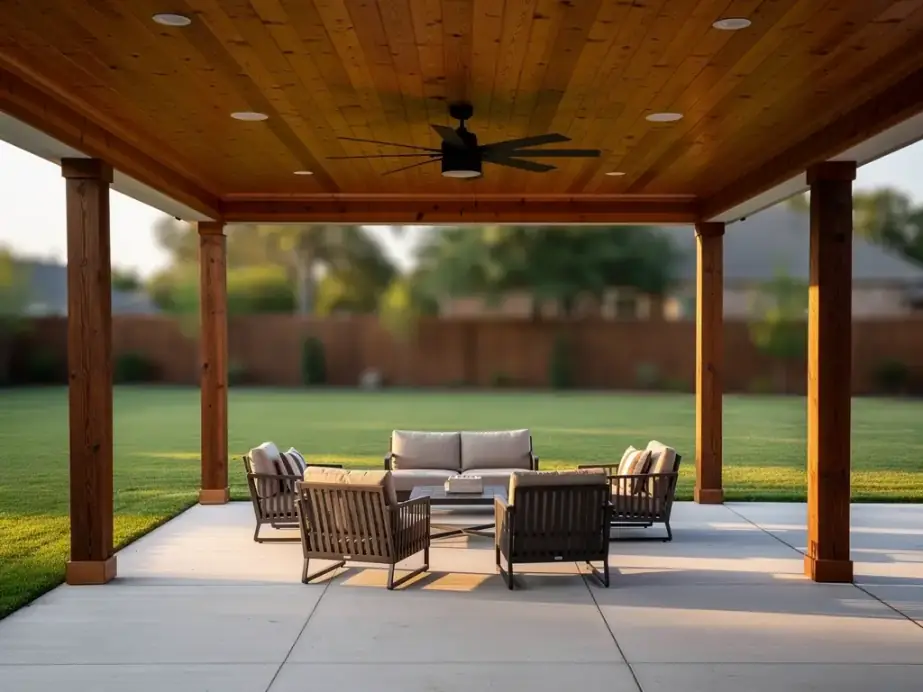
A covered patio with a cedar tongue-and-groove ceiling, ceiling fan, cedar posts and outdoor seating
How an outdoor room gets laid out and built
The first step is reading the site: which way the house faces, where the afternoon sun lands, where water already runs, and where the existing roof edge and rafters sit. The cover is then drawn to meet the house at a point that can be properly flashed, with the slope of the slab checked first so water runs away from the foundation and the back door. Posts get metal standoff bases that hold the wood off the concrete.
KD's own line for this work is "Enhancing your outdoor experience." The craft shows up in the ceiling. Cedar tongue-and-groove goes up tight, blind-nailed so the face stays clean, with a small gap at the edges for the wood to move through Dallas humidity and heat. Cedar is chosen because it resists rot and takes stain well, and the same material appears in the posts and trim so the whole room reads as one piece.
Electrical details are planned before the ceiling closes. A fan gets a box rated to carry its weight and motion, lights and switches go where you will reach for them, and the wiring is run so it stays out of sight. Finish comes last: stain or paint on every cut end, because bare end grain is where water gets into cedar first.
Keeping it sound, and how to start a patio project
Walk the patio after the next hard rain. Look at the base of each post, the joint where the cover meets the house, and the line along the back door. Water standing there, a dark stain on the siding above the cover, or a post foot that feels spongy when you press a screwdriver into it are early signs worth acting on. Cedar that has dulled and gone gray is also asking for a new coat of finish.
When you compare contractors, ask how the cover ties into the existing roof and who flashes it, what lifts the post off the slab, how the slab drains, and what the fan hangs from. Those four answers separate an outdoor room that lasts from one that needs repair. KD also works as general contractor, so lighting, a new door to the patio, or trim that matches the house can be part of the same job.
To start, call or text (682) 268-4055, email contact@kdinstallationsandremodeling.com, or use the contact form and say what the space is like now and how you want to use it. There is no set price list at KD, since a slab that needs regrading is a different job from one that is already sound. Quotes are given on request.
KD Installations & Remodeling, LLC is an EPA Lead-Safe Certified Firm (Renovation, Repair and Painting), certificate NAT-F154375-3.