Remodeling a Pre-1978 Dallas Home: Lead-Safe Basics
If your house predates 1978, the dust from a remodel matters as much as the finished room.
October 16, 2026 · 4 min read
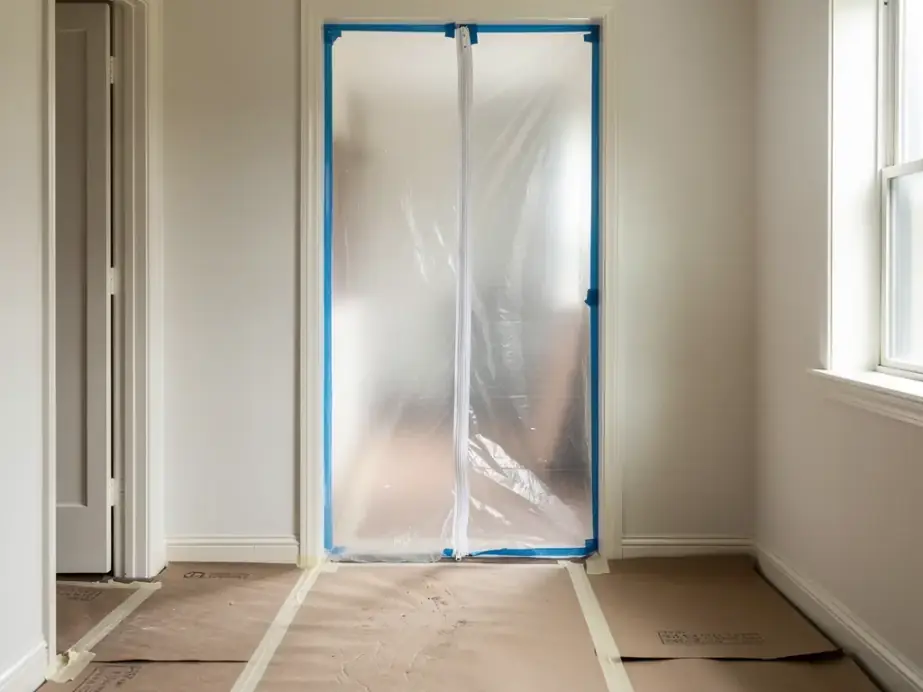
If your Dallas house was built before 1978, there's a fair chance some layer of paint on the trim, doors or windows contains lead. That doesn't mean you can't remodel. It means the way the work gets done matters, because the real hazard is dust, not the painted wall sitting quietly in your hallway.
Why 1978 is the cutoff
Lead went into household paint for decades because it made paint tough and bright. Lead-based paint for homes was banned in 1978, so any house built before that year can have it, often buried under newer coats. You'll find it most often on window sashes, door casings, baseboards, stair parts and exterior siding or soffits.
Paint that's intact and left alone is usually not the problem. The trouble starts when a remodel cuts, scrapes, sands or demolishes it. The fine dust settles on floors and windowsills, gets onto hands and toys, and ends up in small mouths. Lead dust is a well-known danger for young children, which is why a pre-1978 house with kids or grandkids visiting deserves extra care.
What the EPA rule requires of a contractor
The EPA's Renovation, Repair and Painting rule, usually shortened to RRP, applies when a paid contractor disturbs painted surfaces in a house built before 1978. The firm doing the work has to be certified by the EPA, and a trained, certified renovator has to oversee the job and teach the crew the lead-safe methods. Before work starts, the firm also has to hand you an EPA pamphlet explaining the risks of lead during renovation. If a contractor skips that step, treat it as a warning sign.
Very small repairs have exceptions, and a house can be tested to show it has no lead-based paint. But a window swap, a door replacement, a wall taken down or a kitchen gutted will usually fall under the rule. If you're not sure, ask the contractor to explain in plain words why a job is or isn't covered.
What lead-safe work looks like in your house
You can see most of it with your own eyes, which is a good thing. Here's what a careful crew does on the job.
- Warning signs go up at the work area, and the space is closed off so family members and pets stay out.
- Floors are covered with plastic sheeting, doorways are sealed with plastic and tape, and there's usually a zip entry so workers can pass without dragging dust out.
- Furniture is moved out or wrapped, and heating and cooling vents in the work area are covered so the system doesn't carry dust through the house.
- Certain methods are off the table: open-flame burning or torching of paint, and power sanding or grinding unless the tool has a HEPA-filtered shroud and vacuum attached.
- Debris is bagged or contained as the work goes, not left piled where it can be tracked around.
- Cleanup uses a HEPA vacuum and wet wiping, not a dry broom that sends dust back into the air.
How the job gets signed off
The last step is the one most homeowners never hear about. After cleanup, the certified renovator checks the work area with a clean, damp disposable cloth wiped over windowsills and floors, and compares the cloth to a cleaning verification card. If the cloth comes up dirtier than the card, the area gets cleaned again until it passes. It's a simple test, and it keeps a crew honest about what they leave behind.
How to check a firm before you hire
Ask for the firm's EPA lead-safe certificate. A legitimate firm can show it right away, and the EPA keeps a searchable list of certified firms, so you can look the name up yourself in a couple of minutes. Check that the firm name on the certificate matches the name on your contract, and that the certification hasn't expired. A certified renovator's personal training card is a separate thing from the firm's certification, and you want both.
For the record, KD Installations & Remodeling, LLC is an EPA Lead-Safe Certified Firm, certificate NAT-F154375-3, valid through October 1, 2030. You shouldn't take anyone's word for it, ours included, so use the EPA lookup and confirm it.
- Is your firm EPA lead-safe certified, and can I see the certificate?
- Who is the certified renovator on my job, and will that person be on site?
- Will you give me the EPA lead pamphlet before work begins?
- How will you contain dust, and how will you clean up?
- Will you do the cleaning verification before you call the job finished?
Plan for it, don't dread it
Lead-safe work takes a little more setup and a little more cleanup, and a good contractor builds that into the plan from the start. Ask about it while you're still talking scope, so nothing surprises you on day one. A pre-1978 house can be remodeled beautifully and safely. It just needs a crew that treats dust like it matters.
Planning a remodel in an older Dallas home? Call or text KD Installations & Remodeling at (682) 268-4055, or email contact@kdinstallationsandremodeling.com, to request a quote.
KD Installations & Remodeling, LLC, (682) 268-4055
Call (682) 268-4055More articles
Kitchen Remodel or Refresh? How to Decide Before You Call
The difference between a refresh and a remodel usually comes down to whether the layout is the problem.
What's Behind Your Bathroom Tile: Waterproofing Explained
The tile is the finish. What keeps your bathroom dry is everything hidden underneath it.